| trains-worldexpresses.com |

| |||||||
| TRAINS | World-Trains | Orient-Ex | Mideast | Indian Mail | Transsiberian | Rome-Ex | Cape to Cairo | Sud-Ex | ...adieu... |
|
The Myth |
Chronology |
Nord-Express |
Siberien-Express |
Nordroute |
Kurier 1 |
Transmanchourien |
Shanghai-Express |
Allied Forces |
Blauer Express | Moskva-Express | Eastern Europe | Baltics and Finland | Red Arrow | Moscow - Beijing | Tourist Specials | China | Far East | Japan | Travels - Reisen | Sibérie adieu | |||||||||
|
E a s t e r n E u r o p e
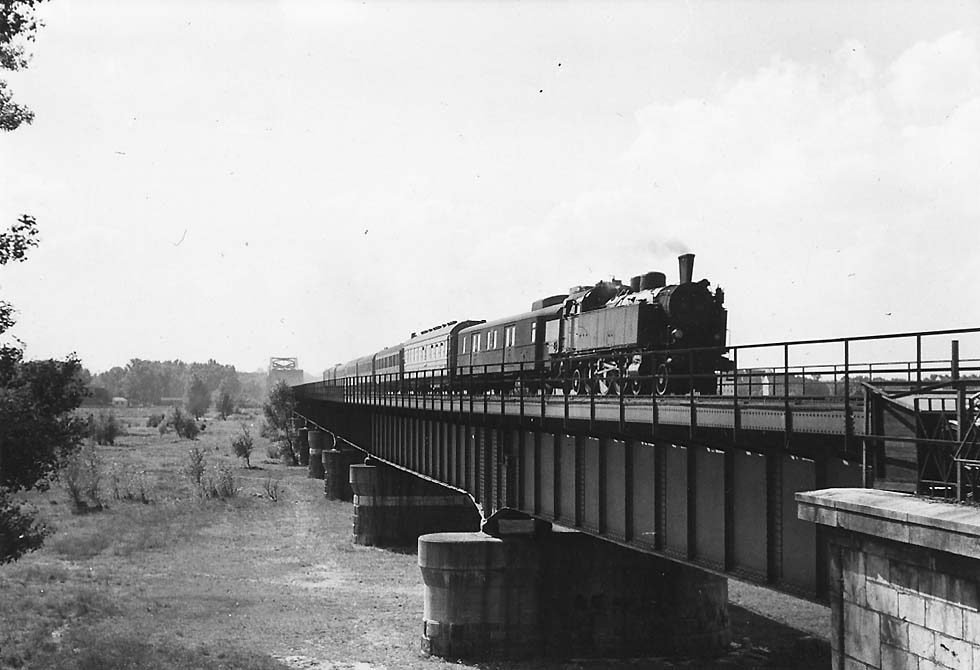
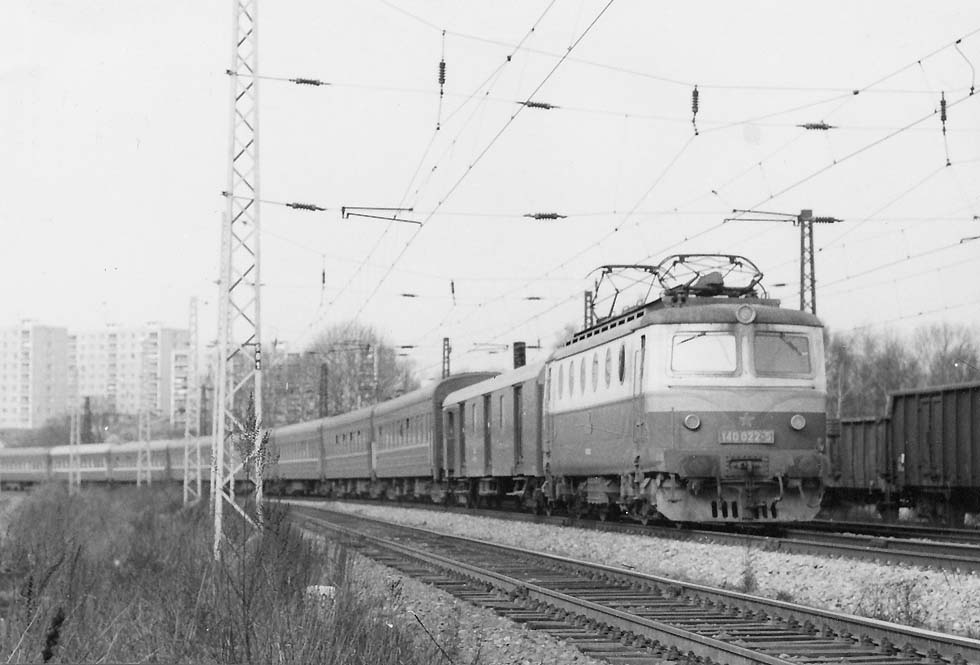
Soviet troops had early headquarters at Legnica, formerly German Liegnitz in Schlesien, now Polish. And they laid a broad gauge track from Lvov, Ukraina, westward to the outskirts of Breslau, now Wroclav Brochow. On this line the German war-type locomotive series 52, built in Poland as Ty42 or Soviet TE was in use for SMA (according to historian Sliwa). There is no exact information about the first Soviet military expresses connecting Legnica. The East European sleeping-car timetable (styled like the CIWL guide, but red instead of blue!) from 1950 mentioned a train 6136 (Legnica) - Wroclav - Poznan - Warsaw - Brest with connection to Moscow. The (secret) W.M.P.S. from 1953 mentioned only Polish coaches Legnica - Brest, but a 1968 edition showed Soviet "soft" and "hard" sleepers Legnica - Brest and "hard" ones, also from Szczecin (the former Stettin) and Swinoujcie. It showed that Legnica headquarters were served by the way of Brest, not Ukraina. And in 1977 by chance a hard compartment sleeper "Moskva - Legnica" was seen. Very early, on June 2, 1945, a Soviet military express D227/526 from Vienna to Sighetul Marmatiei on the way to Ukraina was introduced on standard gauge, hauled by the war-type locomotive series 52. Its successor Bad Voeslau - Mukachevo ended in 1955 with the Soviets' retreat from Austria. At Prague the Soviets got power in 1948 and from 1952 a Russian 01-T sleeper did connect Prague with Moscow via Kiev, with change of bogies at Chop. In Czechoslovakia the 476 class Mountains hauled the express, the same type as the "Drug", a gift to Stalin. On the electrified section, sometimes two steam locomotives and one electric engine were necessary. This train with the Soviet number 18/17 then became the Praga-Express 8/7, also with sleepers Karlsbad - Moscow. This spa, now Karlovy Vary, later saw regular special trains from Russia. The Czechoslovak Railways CSD and the Polish PKP possessed own 01-T, then RIC sleepers for through traffic with bogie exchange and later also Romania got those cars. In 1968 the Soviets knocked down the Prague upheaval and new military trains Milosevice - Moscow and the "Vltava" Prague - Moscow started. The civil "Dukla" Prague - Moscow from 1969 became so heavy, that often two electrics were necessary. Even heavier was the "Slovakia" with a Soviet military section, attaining 1000 tons, as the Czech official Radko Friml reported. In Ukraina during steam age the ex-Polish Pt-31 and the huge "Josef Stalin" 2-8-4 had taken over. Yugoslavia's dictator Tito had his clash with Stalin in 1948. Only in 1956 started a Soviet sleeper Belgrade - Budapest - Kiev - Moscow, conveyed by the Balt-Orient-Express and in Ukraina by train 18/17. In the same year the Soviets bloodily knocked down the Hungarian upheaval. Later Soviet military specials from Hungary were reported, not running on fixed timetables. From 1962 the Belgrade - and Budapest - Moscow cars in Ukraina formed a separate express 10/9. In 1968 a RIC sleeper Rome - Moscow from the Simplon-Express via Zagreb was added. And in 1969 another one was running from Torino to Togliatti on the Volga, where Fiat built a factory. East of Moscow it was conveyed by the "Uzbekistan" Moscow - Tashkent! From 1975 the Belgrade- and Athens - Moscow train became the "Puskin" and from 1980 the connection Italy - Moscow was the "Tisza". From 1991 the Rome sleeper took the way via Vienna in order to avoid troubled Croatia and from the end of the century only a sleeper Zagreb - Budapest - Moscow existed. When a 01-T sleeper Vienna - Moscow had been introduced in 1956, it took the line via Warsaw with the Balt-Orient-Express. In 1961 it became the “Chopin”, temporarily with a RIC sleeper Rome - Vienna - Moscow. From 1975 also the “Praga” was re-routed via Poland, the shorter way. “Chopin” had been the train which 1961 brought Molotov “home” to Moscow, secretly from a Vienna suburban station. And by the “Chopin” Russian Jews legally emigrated to the West and Palestinian terrorists attacked the Chopin. After the end of communism traffic declined and trains became combined. At the turn of the century the sleeping-cars of the Chopin arrived at Moscow together with the sleepers from Budapest and from Cologne. Later the Vltava Prague - Moscow was combined with the Chopin. In 2006 it conveyed the sleepers Prague - Moscow, Cheb (the former Eger) - Prague - Moscow, Prague - Kiev and a Russian sleeping-car from Prague to Saratov on the Volga. In the new century the traffic declined and in Czechia the "Vltava", running Prague - Bohumin - Minsk - Moscow, was combined with the "Slovakia" Prague - Kosice. Bulgaria had been conquered by the Soviets already in 1944. Rail connection was by the way of Romania and the Danube train-ferry Giurgu - Ruse. In 1952 or 53 started a Soviet sleeper Bucharest - Ungheny - Kiev - Moscow, when the Danube bridge had been completed. This was the way for Eastern Europe to circumvent Tito's Yugoslavia and in 1960 a Carpati-Express Warsaw - Bucharest via Soviet broad gauge started, with a sleeper to Sofia. Together with the many Soviet 0-T sleepers Moscow-Sofia it formed the Dunai-Express. In 1968 a RIC sleeper Moscow - Sofia - Istanbul (until 1971 via Greek territory at Pithyon) and in 1990 a short-term Moscow - Sofia - Athens sleeper were added, whilst the Moscow - Istanbul car changed to the Sofia-Express via Czernowitz. During the '40s the Soviet broad gauge to Wroclaw Brochov was reduced to Kattowice, then Przemysl. Until 1993, when the Soviets left Poland, there was a train Legnica - Kiev, which changed bogies at Przemysl, during those days a dealers' center. There had been even the keen idea to run a Talgo train on this way to Kiev! Another matter was the broad-gauge line from Hrubieszow on the Polish-Soviet border to the industrial area of Huta-Katovice, built for ore transport, completed in 1979. The Polish timetable e.g. of 1992 listed also a passenger train Moscow - Kovel - Olkusz, but it remained a mystery. Only in 1976 started a Kiev-Express from Berlin via Brest. Temporarily it had cars to Sochi on the Black Sea. In 1980 came a RIC sleeper from Paris by the Ost-West-Express and in 1981 a short-lived one Munich-Kiev. After the end of communism in the 90's most connections from the West to Ukraina disappeared. The D345/344 Berlin - Kiev - Odessa, then also to Kharkov, with a northern branch to Vilnius and Kaliningrad, was a surprise. The train of prestige always had been no. 1/2 "Ukraina" from Moscow to Kiev. In 1986 it left Moscow with 19 blue cars, four Mest 18 with 2-berth compartments in front of the Mest 36s, hauled by a green ChS7 twin-eclectic d.c., from Sukhinichi a red ChS4 a.c. engine. Dreams of even more prestigious high-speed trains from Ukraine to the West remained unfulfilled. In 2011 however, Russia ordered 4 Talgo trains with a maximum speed of 200km/h, to be employed between Moscow and Kiev. Ukraine built new RIC-Type sleeping cars for gauge change, painted blue like once the CIWL sleepers. During Soviet era a broad gauge line to the industrial area of Kosice in Slovakia had been built. In 2011 the surprising area of extending it to Bratislava was published. Already after the Sovets’ victory there was the secret evaluation of a Russian broad gauge to occupied Vienna, never realized. With nowadays’ political problems in Ukraine, the idea of a Talgo Moscow – Kiev was abandoned. More important was the express from Moscow to Simferopol and the blue ‘Krim’ to Yevpatoria on the Crimean peninsula, as it was registered before the troubles of 2014. Then air traffic took over the task. The sleeping-car services from Moscow to Bucharest and Sofia were not stopped, but diverted via Budapest to Bucharest and to Belgrade – Sofia in order to avoid Kiev. Slovakia Bratislava - Kiev - Moscow Kievskaya, SZD cars from Milovice and Zvolen for Soviet army, other ones civil. Arrival Chop, summer 1989:
Tisza Arrival Chop, May 12, 1986:
Traction:
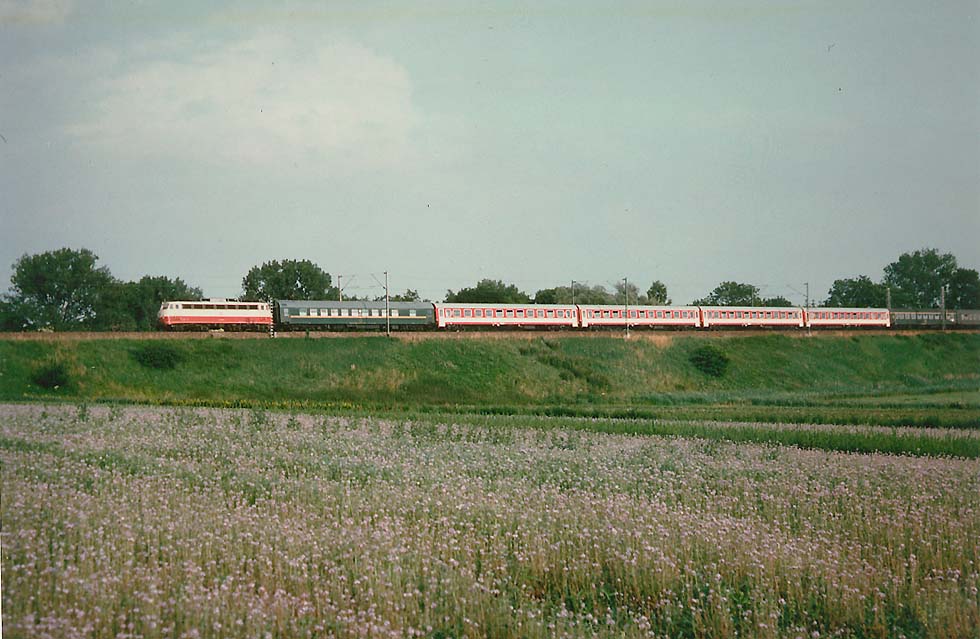
D344 Kiev - Warsaw - Berlin, arrival Berlin Lichtenberg, August 8, 2004 (according to Rico Bogula):
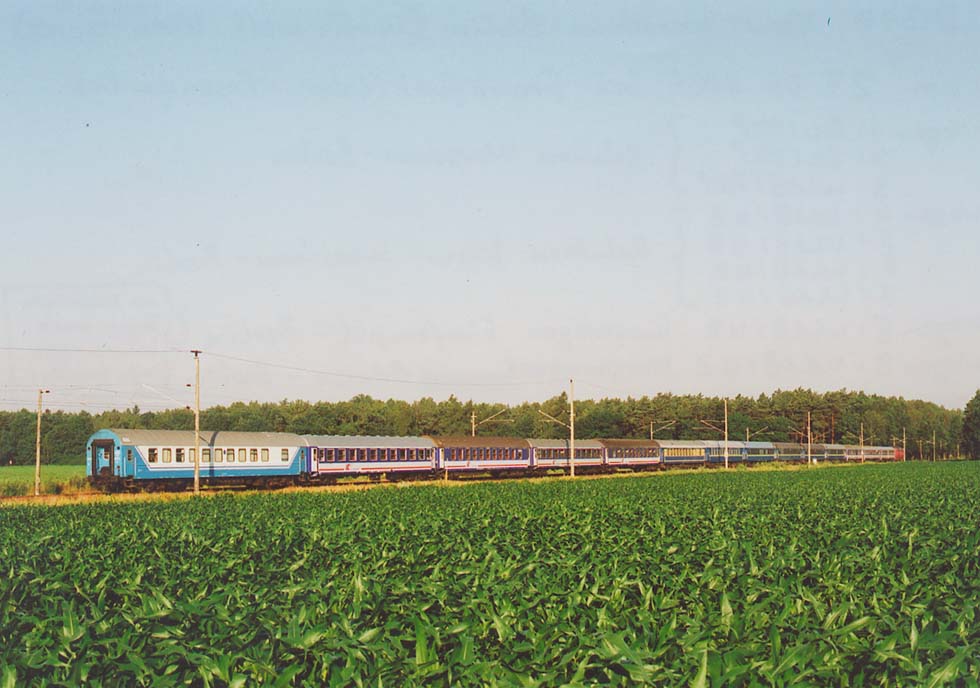
From 2005 also cars Berlin - Krakov Generally the Russian sleeping-cars for “Western” countries were of the RIC type with 3-berth cabins, easily to be distinguished from the typical Russian sleepers with higher profile and the more comfortable 4-berth cabins. Sleeping-cars from Moscow to Rome, Athens or Istanbul have disappeared, but in the first decade of the new century, apart from the more important Berlin trains (see chapter Moskva-Express), three expresses dominated still the routes between Russia and Eastern Europe, and all cars to Russia or Ukraine continued to be sleeping-cars. Scheme of 2008-2009: “Vltava” Moscow - Brest - Katowice - Prague, with cars for Cheb (Eger via Karlsbad), Vienna, Budapest (changing to the “Metropol” Berlin – Budapest) and St.Petersburg – Prague and Zagreb. “Tisza” Moscow - Kiev - Budapest - Belgrade with cars for Zagreb and Venice. “Bolgariya Ekspress” Moscow - Kiev – Chernivtsi (Czernowitz) - Bucharest - Sofia with cars from Minsk and Lviv, and cars for Varna and Burgas. Prague - Kiev with cars for Odessa and Vienna – Bratislava - Kiev were other trains. 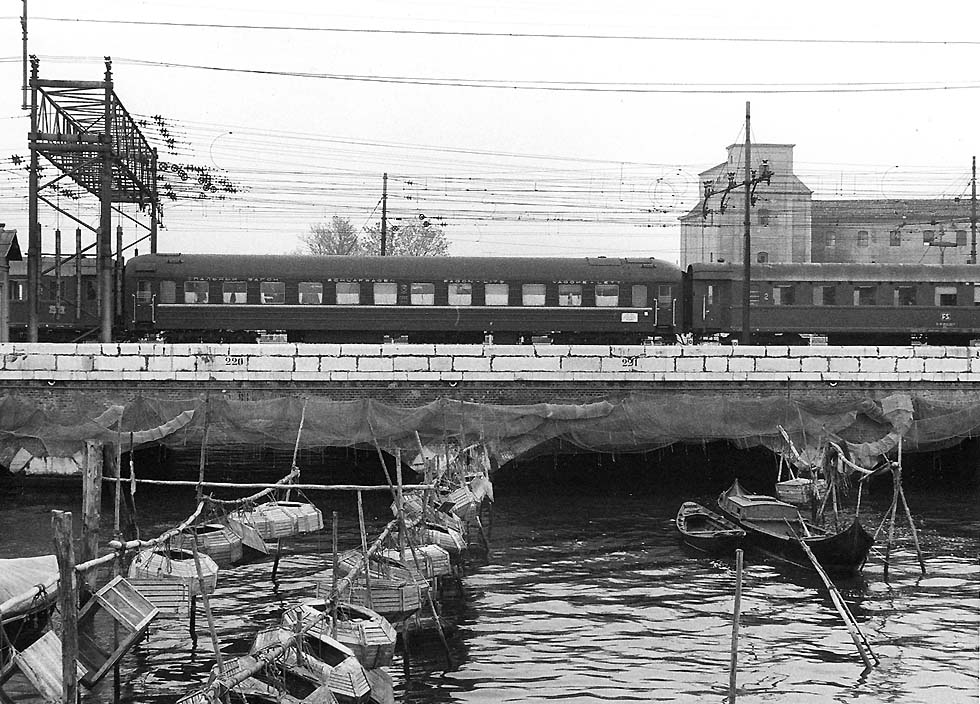 Soviet RIC type sleeper Rome - Moscow for the Simplon-Express, Venice, April 1971 (WS)
 Vltava, 2006/7, (original document, thanks to Radko Friml "Slovakia", combined with "Vltava" Prague - Brest - Moscow, divided at Bohumin departure Prague with CD class 362, March3, 2012:
Moscow - Nice, revival of the Nizza-Express Not a nostalgic special of the past, but a regular up-to-date long-distance express was the sensation when it started in September 2010. Almost on the traces of the Nizza-Express, the legendary train of the Tzar's privileged caste (see chapter Transsiberian/ Nord-Ex), the new once-weekly express was inaugurated on a route Moscow - Minsk - Brest - Warsaw - Bohumin - Vienna (Meidling) - Innsbruck - Brenner - Milan (Rogoredo) - Genoa - Nice, taking two nights and a day in every direction, thus establishing a fantastic connection to the Cote d'Azur resorts. While the old Grand Expresses, the Train Bleu, the TEE, most EC and almost all international expresses vanished from Western Europe, Russian railways RZhD via their subsidiary Federal Passenger Company introduced this train, consisting of new Russian-built RIC-type 26.4m-sleeping cars. In 2012 the train ran every 2 weeks. Consist in Czechia, Sept. 2010: 1 sleeper 2nd class (RZhD) Moscow - Nice 6 sleepers 1st class (RZhD) Moscow - Nice 2 dining-cars (PKP) Warsaw - Nice 3 sleepers luxury (RZhD) Moscow - Nice The cabins of the luxury class are equipped with own toilet room with shower. Around 2012 new Austrian-built sleepers were introduced. Change of bogies is necessary at Brest and the Russian diners have to be changed against Polish dining-cars. With fares between 306 and 1,200 euro, with its new paint scheme, the nice stewardesses and with its unique itinerary, this train was the surprise of the decade. As there are no trains of Western administrations entering Russia, the Russian railways have agreed to pay a fee for the train using foreign tracks. An insider reported continuing disputes about the amount. Nevertheless in December 2011 a similar Russian train Moscow - Berlin - Paris started (see the chapter Transsiberian/ Moskva-Express). Western railways could learn from this excellent Russian services, how to win back the touristic traffic, lost to plane, car and bus. Frederic Parde, a representative of French railways SNCF, was quoted saying: "We need to start thinking again about the luxury trains of bygone days, like the Orient-Express." The route to and from Nice goes via Brenner, but in 2015 some deviations via Tarvisio and the Tauern were a surprise. In 2014 it has got new cars, like the Moscow – Paris train.
|